Wondering whether Castle Pines golf course living is really worth the premium? If you are drawn to fairway views, gated privacy, and a resort-style setting, it can be an exceptional fit, but only if you understand what you are actually buying. In Castle Pines, golf living is not one thing. It can mean a low-maintenance patio home, a custom estate on acreage, or simply a home near golf without club access. This guide will help you sort through the options, weigh the tradeoffs, and buy with more confidence. Let’s dive in.
Golf living starts with location
When buyers talk about golf course living in Castle Pines, they are often talking about The Village at Castle Pines. This private, gated community in unincorporated Douglas County spans about 2,800 acres and includes roughly 1,900 homes, five staffed gates, in-house emergency services, and an elevation range of about 6,000 to 6,500 feet along the Front Range. According to The Village at Castle Pines, it is also about 30 to 35 minutes from downtown Denver and 15 minutes from the Denver Tech Center.
That setting matters because The Village is built around more than just golf. The community includes two recreation complexes, pools, tennis, pickleball, a fitness center, playgrounds, and about 13 miles of trails. If you want a home where golf is part of the backdrop, but not the only lifestyle feature, that broader amenity package is a big part of the appeal.
It also helps to know that The Village is different from the City of Castle Pines. The city is a separate incorporated municipality in Douglas County with a population of about 16,000, according to the City of Castle Pines. That distinction can affect how you think about neighborhoods, services, and the type of golf access available.
Private club access is separate
One of the most important things buyers should know is that living near golf is not the same as having golf membership. The Village sits between two private Jack Nicklaus-designed clubs: Castle Pines Golf Club and The Country Club at Castle Pines. But ownership in The Village does not automatically include club membership.
That separation can actually be helpful. It means you can enjoy the visual setting, prestige, and lifestyle of a golf-oriented community without committing to a club right away. It also means you should evaluate the home purchase and any potential club membership as two separate decisions.
For buyers who want active golf access, that difference is especially important. The Country Club at Castle Pines caps golf membership at 395, while Castle Pines Golf Club is invitation-only. If club access is central to your decision, you will want to confirm details early rather than assume proximity equals participation.
Housing options are broader than many buyers expect
A common misconception is that Castle Pines golf living only means large custom estates. In reality, the housing mix is much more varied. The Village’s homebuyer FAQ notes that homes include custom-built homes, luxury estates, and select new construction.
The development framework also allows townhouses, cluster development, patio homes, and condominiums, according to the Douglas County development summary. That opens the door to different price points, maintenance levels, and floor plans than many buyers expect.
This is one reason Castle Pines appeals to several buyer types at once. You may be looking for a lock-and-leave second home, a downsizing option with single-level living, or a statement property with privacy and golf frontage. The area can support all of those goals, but the right fit usually comes down to the specific enclave, lot, and HOA structure.
Neighborhood differences matter
The Village is not a single uniform neighborhood. Its official map shows a wide range of enclaves, including The Fairways, The Greens, The Ridge, The Glen, Country Club Ridge, Country Club Cottages, Chateau Ridge, Village Lake, The Cliffs, Prato, The Homestead, Northstar, The Pointe, and The Settlement, among others. You can review the official Village map to see how the community is laid out.
That variety matters because one enclave may feel very different from another. Some homes are more course-oriented, some lean more wooded and private, and some are designed for easier upkeep. Even within the same community, your day-to-day experience can shift based on road access, topography, lot placement, and how directly a home relates to golf.
HOA structure can vary too. The Village Homes Association notes there are 19 sub-associations, with dues assessed differently for custom and cluster properties. Before you buy, it is worth reviewing not just the main HOA, but also the sub-association rules, services, and fee structure tied to the specific property.
Views, trees, and terrain shape the lifestyle
Castle Pines has a very different physical feel than a flat suburban golf community. The development guide emphasizes preserved vegetation, open space, and terrain-sensitive planning, including alternative standards for cluster homes and reduced setbacks on steep sites. You can see that hillside design approach in the county planning summary.
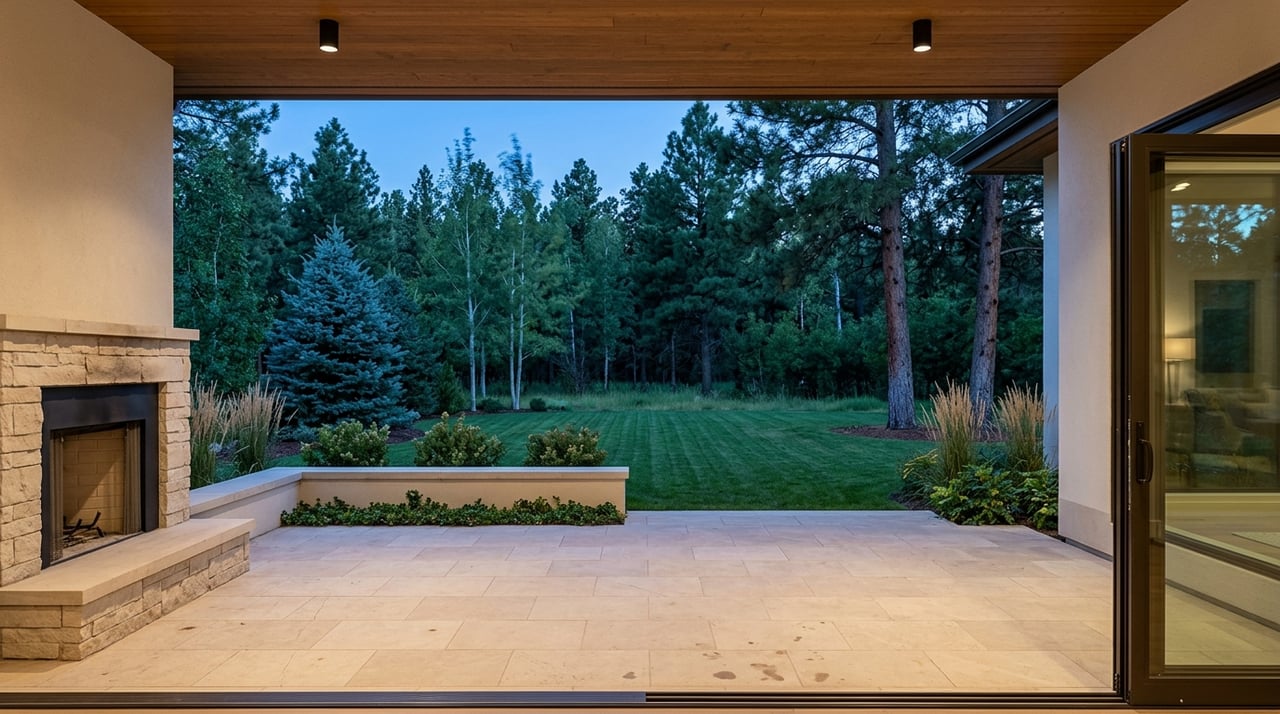
For you as a buyer, that means views are not limited to fairways. Some homes capture mountain vistas, wooded privacy, or elevated outlooks over rolling terrain. In many cases, a home without direct golf frontage may still deliver strong visual appeal because of its setting, privacy, or orientation.
The tree canopy is a major part of the atmosphere, but it also comes with responsibility. The Village highlights forest stewardship, wildfire mitigation, and Firewise USA certification. If you love mature trees and a natural setting, you should also be prepared for the upkeep and defensible-space considerations that come with it.
Golf frontage is not the only premium driver
National Golf Foundation research suggests homes with direct frontage on or immediate proximity to a golf course average about a 15 percent value premium, according to the NGF. But in Castle Pines, that broad benchmark only tells part of the story.
Here, value tends to come from a blend of factors. Direct fairway exposure can matter, but so can lot size, privacy, mountain views, home design, and whether the property offers a low-maintenance lifestyle or a highly customized estate experience. Buyers are often paying for scenery, scarcity, and ease of ownership, not just a golf address.
That is why two homes near the course can feel very different in value. One may appeal because it sits directly on a fairway, while another may command attention because it offers better privacy, simpler upkeep, or a stronger overall floor plan. The best purchase is usually the one that aligns with how you actually want to live, not just what sounds impressive on paper.
Price points span a wide range
Castle Pines is already a premium market, and golf-oriented inventory often sits at the higher end of that range. As of January 2026, Realtor.com reported a median listing price of about $962,000 for Castle Pines overall, compared with about $1.73 million for Castle Pines Village. Redfin’s February 2026 snapshot for Castle Pines Village put the median sale price at $1.8 million.
Even within that premium segment, there is still meaningful range. Based on current listing examples referenced in the research, a patio-home or golf-villa style property may sit closer to the $1 million mark, while larger custom homes with fairway frontage or acreage can move well beyond $2 million.
That spread is useful for buyers because it shows golf course living is not one-size-fits-all. You are not just choosing a location. You are choosing a maintenance profile, view type, lot style, and lifestyle intensity.
Compare private and public golf settings
Not all golf-adjacent living in the area works the same way. Inside The Village, the golf identity is tied to private clubs and gated residential living. Nearby, the Ridge at Castle Pines North offers a different model as a Troon-managed public course with four tee sets ranging from 5,000 yards to more than 7,000 yards.
There are also neighborhoods outside The Village with golf adjacency. For example, the City of Castle Pines identifies The Hamlet as a neighborhood of 61 single-family homes built between 1987 and 1996 on parcels under half an acre, adjacent to fairways of The Ridge at Castle Pines North Golf Course. That is a different product from gated Village living, even though both can offer course proximity.
If you are comparing options, ask yourself what matters most:
- Gated privacy and private-club surroundings
- Public golf access and a different price structure
- Low-maintenance living versus custom-home ownership
- Direct fairway frontage versus wooded privacy or mountain views
- Primary residence use versus lock-and-leave flexibility
What buyers should look at closely
Before you buy in a golf-oriented Castle Pines neighborhood, focus on the details that shape daily life and long-term value.
Review membership separately
Do not assume club access comes with the home. Confirm whether you want membership, whether it is available, and how that decision fits your budget and lifestyle.
Study the lot itself
A fairway lot may sound ideal, but privacy, sun exposure, cart-path proximity, and sightlines can vary widely. In some cases, a wooded or elevated lot may fit your goals better than direct course frontage.
Understand the upkeep level
Some buyers want a lock-and-leave patio home. Others want acreage, mature landscaping, and a custom property with more maintenance responsibilities. Be honest about how hands-on you want to be.
Read the HOA and sub-association documents
In The Village, governance can differ by enclave and property type. Review dues, design standards, and service levels before you commit.
Think about resale appeal
The broadest resale appeal is often tied to homes that combine a strong setting with practical livability. Features like single-level living, manageable upkeep, and access to amenities can help support demand over time.
The bottom line on Castle Pines golf living
Castle Pines golf course living can be a compelling choice if you want more than a house. You are buying into a setting that may include gated access, private-club surroundings, trails, recreation amenities, wooded terrain, and a broad range of home styles. But the smartest buyers treat golf, membership, HOA structure, and property type as separate layers of the decision.
If you want help comparing enclaves, evaluating lot value, or narrowing the right fit in The Village or surrounding Castle Pines neighborhoods, connect with Stacie Chadwick. You will get thoughtful local guidance, clear market insight, and a polished buying experience tailored to your goals.
FAQs
What does golf course living in Castle Pines usually mean?
- In Castle Pines, golf course living often refers to homes in or near The Village at Castle Pines or other golf-adjacent neighborhoods, but it does not automatically mean club membership is included.
Do homes in The Village at Castle Pines include golf membership?
- No. According to The Village, golf memberships are separate from HOA dues, and living in the community does not require club membership.
What types of homes are available near golf in Castle Pines?
- Buyers can find custom homes, luxury estates, select new construction, and in some areas townhouses, cluster homes, patio homes, and condominiums.
Is Castle Pines golf living only for buyers seeking large luxury estates?
- No. The housing mix includes both large custom properties and lower-maintenance options that may appeal to buyers looking for easier upkeep or lock-and-leave flexibility.
How much more expensive is Castle Pines Village than Castle Pines overall?
- Recent market snapshots in the research show Castle Pines Village at a notably higher median listing and sale price than Castle Pines overall, reflecting its premium positioning and housing mix.
What should buyers compare when choosing a golf-oriented home in Castle Pines?
- Focus on whether club access is important, the lot’s privacy and views, maintenance level, HOA structure, and how the property may perform for resale over time.