Type "Village at Castle Pines home prices" into a search bar and you'll get three different answers before lunch. One portal says the average home here is worth $888,879. Another says the median is $1.6 million. A third, pulling fresh listings as of late August, shows new construction sitting at a $1.9 million median. None of these sources made an error. They're measuring three different places that happen to share one name, one ZIP code, and a great deal of confusion.
Here's a detail that trips up more searches than it should: homes inside the gated community known as The Village at Castle Pines carry a Castle Rock, Colorado 80108 mailing address, not a Castle Pines one, even though the community sits north of Castle Rock and south of the incorporated City of Castle Pines. If you're comparing listings by typing a city name into a search box, you can miss the exact inventory you're trying to price.
That address quirk is a symptom. The real story is bigger, and it matters if you're trying to figure out what your money actually buys here.
One Name, Three Boundaries
The confusion starts with governance, not marketing. In Douglas County, searches for "Castle Pines" can refer to three different boundaries: the City of Castle Pines, the Castle Pines Village CDP, and the gated community within it.
The City of Castle Pines is the incorporated municipality, first established in 2008 as Castle Pines North before a 2010 vote renamed it the City of Castle Pines. It has a city council, its own boundaries, and a broad mix of housing stock, from 1990s starter-tier homes to newer construction.
Castle Pines Village is different. It's an unincorporated census-designated place governed directly by Douglas County, home to roughly 4,300 residents as of the 2020 census, and it's the community almost everyone actually means when they say "The Village at Castle Pines." You can confirm its status as an unincorporated CDP directly on its Wikipedia entry, which is a useful gut check before you trust any portal's boundary lines.
Then there's the gated community itself, the physical enclave with staffed entrances and a homeowners association, which is what most buyers are picturing when they picture golf carts and pine forest. It sits inside the Castle Pines Village CDP, but its footprint and the CDP's footprint aren't drawn identically on every data provider's map.
Three boundaries. One name. Wildly different price tags depending on which one a given website is drawing around its dataset.
Why the Averages Moved in Opposite Directions
Here's where it gets genuinely strange, and where the market data stops being trivia and starts being useful.
Over the same three-month window ending in May 2026, the median sale price inside Castle Pines Village dropped 1.6% year over year to $1.6 million, according to Redfin's tracking for that specific boundary. Over that identical window, the median sale price for the broader City of Castle Pines rose 12.8% year over year to $999,000, per Redfin's separate page for the city.
Same three months. Same general geography. Opposite directions.
This isn't two markets disagreeing about value. It's two different baskets of homes being averaged. The city-wide figure blends in the more affordable Castle Pines North tier and mid-priced Canyons construction, both of which saw price growth. The Village-specific figure is pulling only from custom and estate-tier sales, where the mix of what closed in a given quarter can swing the number hard in either direction even when nothing fundamental has changed about buyer demand.
The average price for Castle Pines Village told an even more dramatic story: down 29.0% year over year in the most recent monthly snapshot, even as the median for the same period barely moved. That's not a market in freefall. It's an average being pulled around by which handful of homes happened to close that month. When a few multi-million dollar custom estates sell in one period and don't repeat the next, the average swings hard while the median, which only cares about the middle of the pack, holds relatively steady.
| Data Source & Boundary | Period | Price | What It's Actually Measuring |
|---|---|---|---|
| Zillow Home Value Index, City of Castle Pines | Updated 7/31/2026 | $888,879 average | Blended value across the entire incorporated city |
| Redfin, City of Castle Pines | 3 months ending May 2026 | $999,000 median | Blended city-wide, up 12.8% YoY |
| Redfin, Castle Pines Village | 3 months ending May 2026 | $1.6M median | Gated community and CDP only, down 1.6% YoY |
| Realtor.com, Village at Castle Pines | Snapshot near May 2026 | $1.85M median list | Village-specific active listings |
| Redfin, new construction in Castle Pines Village | As of 8/20/2026 | $1.9M median list | 6 new homes only, a thin and volatile slice |
If you only see one row of this table, you'd draw the wrong conclusion about the entire market.
Three Tiers Across the Castle Pines Area
Even once you've settled on the right boundary, the broader Castle Pines area isn't one price point. It has three distinct tiers across separate footprints, and confusing them is the second most common mistake I see buyers make.
Castle Pines North is the value tier, built out mostly in the 1990s and 2000s. These are established single-family homes, some without any HOA at all, and they sit at the lower end of what "Castle Pines" pricing can mean.
The Canyons is the active construction story. The city annexed this parcel in 2009, and builders are still filling it in today. Entry pricing here has started well below the gated Village proper, and the amenity center at Canyon Village, anchored by The Exchange Coffee House & Wine Bar and the Canyon House gathering space, gives this tier its own identity rather than borrowing the Village's.
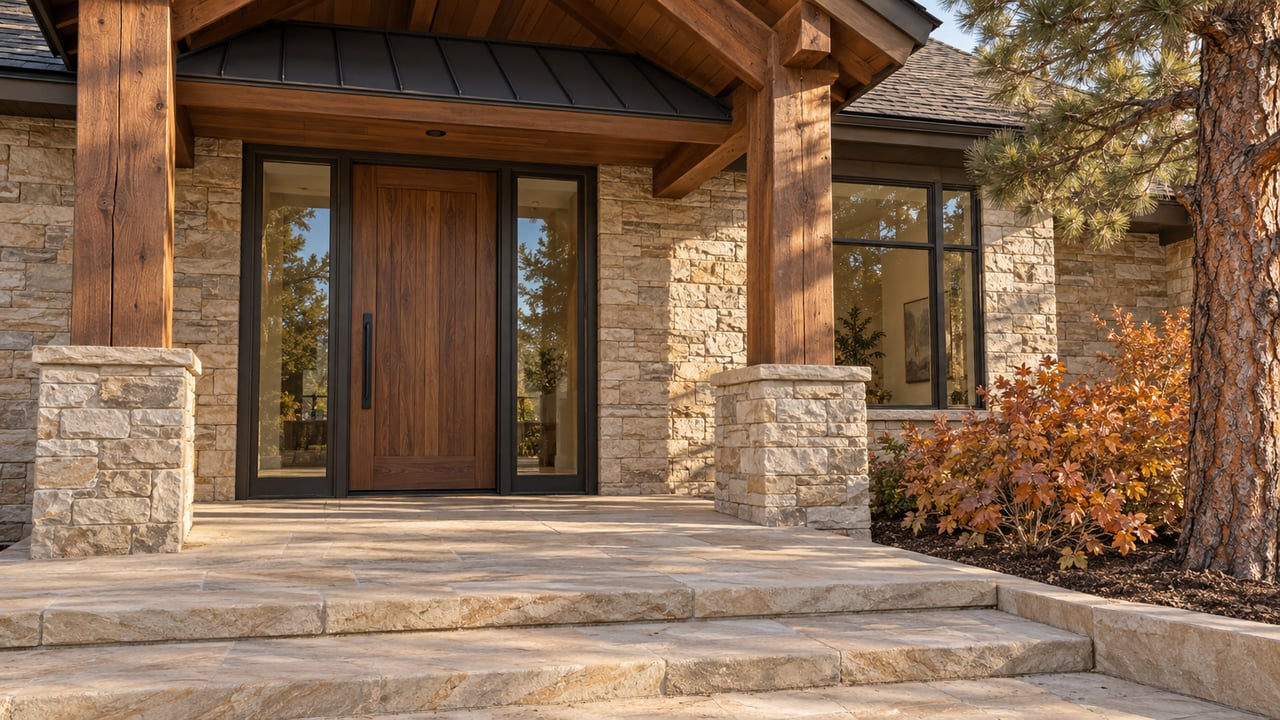
The Village at Castle Pines proper is the true gated enclave: five staffed entry gates, roughly 2,800 acres of pine forest and rock outcropping, and the pricing that shows up in the $1.6 to $1.9 million median range through the middle of 2026. This is where you'll find neighborhoods like The Summit, and within the Country Club at Castle Pines, new-construction sections like Back Tees.
A buyer comparing "Castle Pines" listings without knowing which of these three tiers they're looking at isn't comparing houses. They're comparing categories.
The Governance Layer That Doesn't Show Up in Any Median
None of the price figures above capture what it actually costs to hold a home inside the gates, because ownership here comes with more than one bill.
The Castle Pines Homes Association, formed in 1981, is the master HOA and includes 19 separate sub-associations, each of which can carry its own dues and design rules on top of the master assessment. Running alongside that, entirely separately, is the Castle Pines Village Metropolitan District, a special district established in 1973 that handles water supply, wastewater, storm drainage, road maintenance, and snow removal. HOA dues and metro district charges are not the same line item, and buyers who only budget for one are usually surprised by the other.
Golf access adds a third layer. The two courses inside the Village, Castle Pines Golf Club, which hosted the 2024 BMW Championship, and the separate Country Club at Castle Pines, both operate membership independently of HOA dues. Buying a home here does not include a golf membership, and pricing a home purely off its median sale figure tells you nothing about what club access would add to your monthly cost.
Colorado is also a non-disclosure state, meaning the sale price on a closed transaction isn't part of the public deed record the way it is in many other states. What you see on a national portal is typically an estimate or broker-reported figure, not a filed public record, which is one more reason the exact number on any given site should be treated as a starting point for a conversation, not a finished answer.
What This Actually Means If You're Comparing Neighborhoods
If you're cross-shopping Castle Pines against other South Metro Denver communities, the number that matters isn't whatever the first portal shows you. It's the boundary and the tier behind that number. A $999,000 median tells you about the whole incorporated city, including Castle Pines North's value-tier resale stock. A $1.6 to $1.9 million median tells you about the gated Village specifically, and often about its custom-estate end in particular. Both are accurate. Neither is complete on its own.
The practical move is to ask, before you fall in love with a headline number, exactly which sub-association, which tier, and which boundary that figure represents. A comp pulled from Castle Pines North tells you very little about what a custom estate on Tournament Drive inside the gates will actually cost, and vice versa.
FAQ
Is Castle Pines Village the same as the City of Castle Pines? No. Castle Pines Village is an unincorporated census-designated place governed by Douglas County. The City of Castle Pines is a separate incorporated municipality just to the north, established in 2008 and renamed from Castle Pines North in 2010.
Why do median list price and median sale price disagree by hundreds of thousands of dollars? They're often pulling from different tiers or slightly different time windows. A median list price on active inventory can run well above a trailing median sale price if the most recent listings skew toward larger custom estates, which is common inside the gated Village.
Does a golf club membership come with the HOA dues? No. Membership at either Castle Pines Golf Club or the Country Club at Castle Pines is handled separately from Homes Association dues and from Metropolitan District charges.
If you're trying to make sense of what a specific address inside Castle Pines actually costs to buy and to hold, that's a conversation worth having before you rely on any single portal's number. Stacie Chadwick works this market street by street, sub-association by sub-association, and can walk you through exactly which boundary and which tier your search should be built around. Let's Connect.
This article is general information, not legal, tax or financial advice. Consult a qualified professional about your situation.